After a fire, one of the most frustrating problems property owners experience is smoke odor that seems to disappear—only to return later.
The property may have been cleaned and treated, and everything may smell fine for several days or weeks. Then the odor returns when the building becomes warmer, the humidity changes, or the HVAC system begins operating.
Why does this happen?
In many cases, returning smoke odor means fire residue or another odor source remains somewhere in the building, its systems, or its contents.
Smoke Travels Beyond the Fire
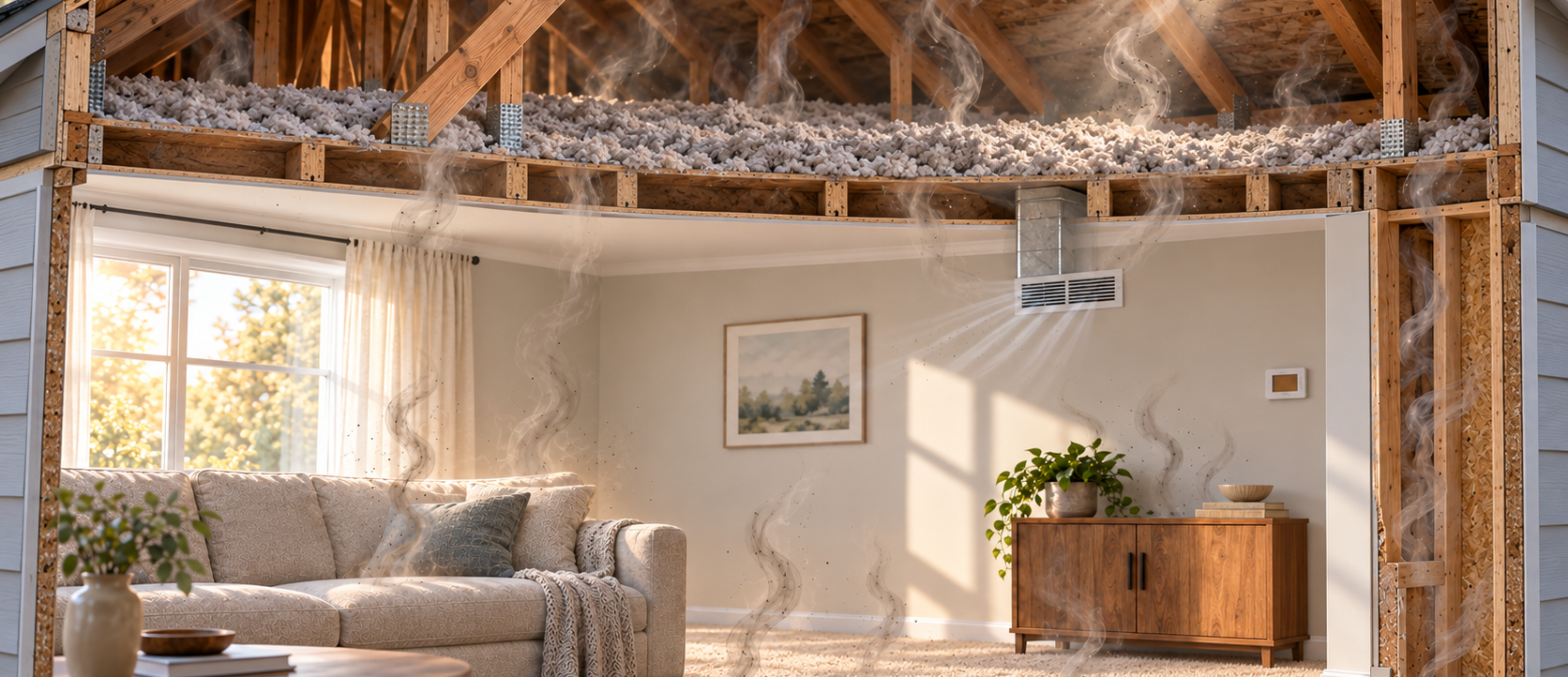
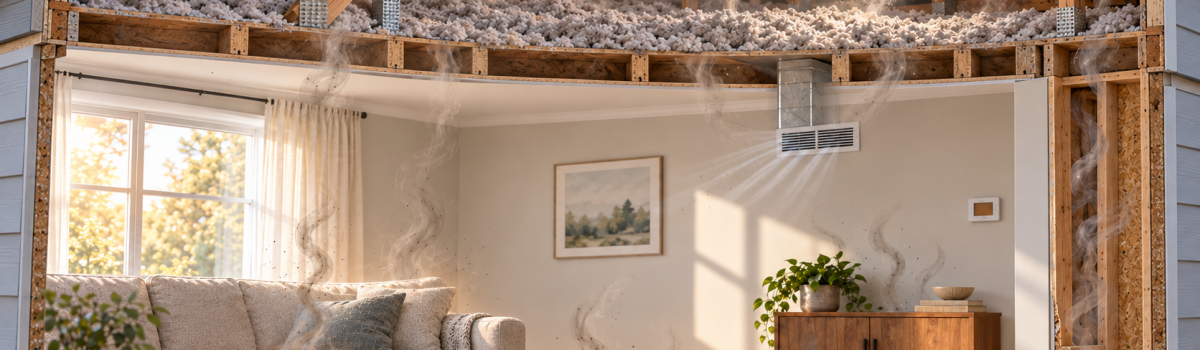
Smoke moves with heat and air currents. It can travel through doorways, attics, wall openings, utility penetrations, and HVAC systems.
Smoke residue and odor may settle:
- Inside wall and ceiling cavities
- Above or behind cabinets
- On structural framing
- Inside insulation
- In carpet and other porous materials
- Inside closets and drawers
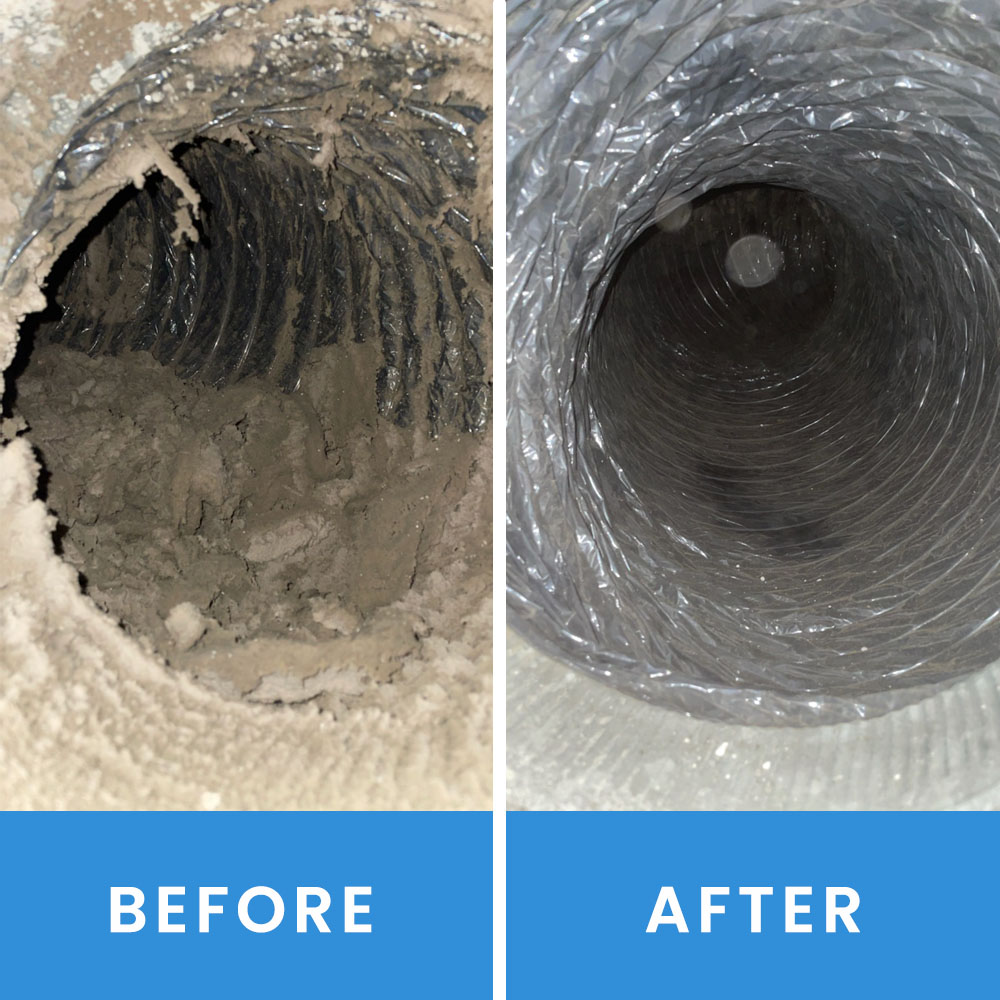
- Within HVAC systems
- On contents located far from the fire
Even a relatively small fire can affect areas that do not show visible burning or heavy soot. If only the visibly damaged room is cleaned, residue outside that room may continue producing odor.
Finding the Full Affected Area Matters
The ANSI/IICRC S700-2025 Standard for Professional Fire and Smoke Damage Restoration addresses the assessment, cleaning, source removal, and odor management needed after a fire.
An important part of the assessment is determining the presence, intensity, and boundaries of fire residue and odor. In simple terms, a professional restorer must determine how far the contamination traveled—not just where soot can be seen.
This may require inspecting adjoining rooms, concealed spaces, contents, surfaces, and possible airflow pathways. If the full boundaries of the damage are not identified, part of the odor source may be missed.
Different Fires Require Different Cleaning Methods
Not all smoke residue is the same. The materials that burned and the conditions of the fire affect the contamination left behind.
Wood and paper may create lighter, drier particles. Cooking and protein fires can leave a thin, greasy residue with a powerful odor. Plastics and synthetic materials may create dark, oily residue that smears easily.
Smoke also affects materials differently. A cleaning method that works on metal or painted drywall may not work on unfinished wood, insulation, carpet, or upholstery.
Professional fire restoration may require a combination of cleaning, material removal, air filtration, controlled abrasion, deodorization, and sealing. There is no single product or treatment that works for every fire.
Source Removal Comes First
One of the most important principles in the S700 is source removal.
Depending on the fire, source removal may include:
- Removing burned or nonsalvageable materials
- Cleaning soot and residue from affected surfaces
- HEPA vacuuming loose particles
- Removing contaminated insulation
- Cleaning or abrading structural materials
- Addressing affected contents
Some materials can be cleaned and restored. Others may be too heavily contaminated and must be removed.
Air fresheners and household sprays may temporarily cover smoke odor, but they do not remove soot or fire residue. Professional deodorization treatments can help, but they should support proper cleaning and source removal—not replace them.
If heavily contaminated materials or residue remain, the odor may eventually return.
Why Smoke Odor Can Become More Noticeable
Smoke residue can penetrate porous materials or become trapped in concealed areas. Changes in temperature, humidity, and air movement can sometimes make remaining odors more noticeable.
This release of trapped odor-causing compounds is commonly called off gassing. As temperatures rise or humidity changes, porous materials may release smoke odors they absorbed during the fire. This can make the odor seem as though it has suddenly returned, even though the underlying smoke residue was never fully removed.
The smell may become stronger when:
- The building becomes warmer
- Indoor humidity changes
- Sunlight heats an affected area
- The HVAC system begins operating
- A closed cabinet or closet is opened
These conditions may not have created a new problem. They may have simply made an existing odor source easier to detect.
The HVAC System Should Be Evaluated
The S700 includes HVAC and air-conveyance systems as areas that may need to be assessed after a fire.
If the HVAC system operated during or after the fire, it may have drawn in smoke particles and distributed them to other rooms. Smoke may also enter registers or returns even when the equipment is off.
HVAC cleaning is not automatically necessary after every fire. However, the system should be evaluated if odor becomes stronger when it operates, residue is found near vents, or other evidence suggests it was affected.
Can Smoke Odor Be Completely Removed?
In many cases, smoke odor can be successfully removed. However, the outcome depends on whether affected areas and materials can be located, accessed, cleaned, removed, or properly sealed.
The S700 includes post-restoration evaluation as part of the professional fire-restoration process.
At TriForce Restoration, we are honest about odor-removal expectations. If an odor source cannot be removed or properly treated, we cannot guarantee that the odor will not return.
The Bottom Line
Lasting smoke-odor removal requires more than masking the smell. It requires identifying the full affected area, removing or cleaning the sources, evaluating affected building systems, and selecting the appropriate odor-management process.
At TriForce Restoration, we provide professional fire and smoke mitigation, structural cleaning, soot removal, and odor treatment for homes and businesses throughout Oklahoma. Our work follows recognized ANSI/IICRC restoration principles, with an emphasis on source removal and clear communication.
If smoke odor continues returning after a fire, call TriForce Restoration at 405-242-3121 to schedule an evaluation.
Saving Structures; Restoring Peace of Mind.